Pump and gauge verification
Technicians review pump output, valve behavior and gauge accuracy so crews know whether slow advance, pressure drop or inconsistent readings come from the power unit, hose path or cylinder condition.
Enerpac service programs focus on the parts of hydraulic work that cannot be left vague: pressure verification, seal condition, pump response, hose integrity and the calibration records that keep a bolting or lifting plan defensible.
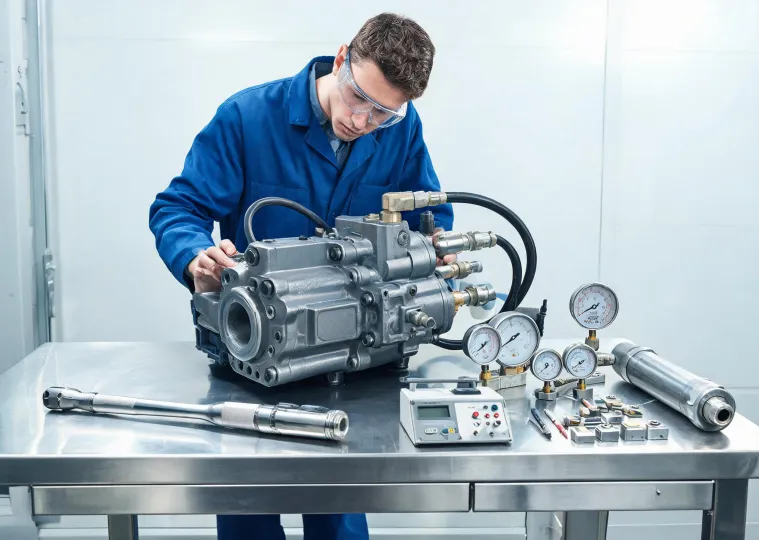
Hydraulic tools are often called into shutdown windows, bridge work, press maintenance and large assembly tasks where a delayed pump or drifting gauge can stop an entire crew. Enerpac service planning starts by identifying the tool duty, the pressure class, the operating environment and the documentation required by the site. From there, the support path can separate routine wear items from issues that require teardown, pressure testing or calibration. This keeps the conversation specific enough for maintenance planners while still understandable for procurement teams that need accurate scope, lead time and return expectations.
Technicians review pump output, valve behavior and gauge accuracy so crews know whether slow advance, pressure drop or inconsistent readings come from the power unit, hose path or cylinder condition.
Rams, couplers, saddles and seal kits are checked against the job profile. The goal is to return cylinders with clean movement, confirmed capacity and a clear note about any handling practices that should change.
Hydraulic torque tools are reviewed with reaction points, cassette condition and pump compatibility in mind. Calibration records help connect the tool setting to the joint procedure used in the field.
For planned outages, Enerpac support can help define spare hoses, backup pumps, lifting points and operator checks before the tools are shipped to the work area.
Good hydraulic service is not just repair after a failure. It is the discipline of knowing which gauge, coupler, seal and pump setting will be trusted when the load is already in the air.
Enerpac service planning note
A useful service request includes the pump type, cylinder or torque tool series, hose length, last calibration date, working pressure and the symptom observed during operation. Photos of the coupler, gauge and tool nameplate make triage faster.